Specialist Installers and Suppliers of
Monitored CCTV
To prepare for a drone roof survey, you need to do four things: tell the pilot why you need the survey and what problems you already know about, confirm that the pilot has permission to take off and land on the site, let the people on and around the site know when it will happen, and keep a clear, safe area free on the day. Everything to do with aviation rules, airspace checks, insurance and risk assessment is the drone operator’s job, not yours.
Most guides blur those two roles together. This one separates them, so you know exactly what to do, what to ask, and what to leave to the pilot.
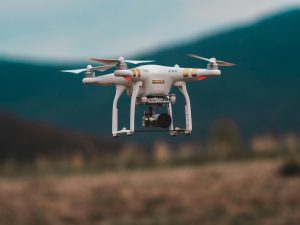
A drone roof survey is a visual inspection of a roof carried out with a camera drone, flown by a qualified pilot from the ground. It captures high-resolution photographs and video of every slope, ridge, valley, gutter, flashing, chimney and rooflight, without anyone needing to climb a ladder or put up scaffolding.
Common reasons to book one include:
Falls from height remain one of the most common causes of fatal injuries at work in Great Britain. The Health and Safety Executive’s guidance on working at height says work at height should be avoided where it is reasonably practicable to do so. Its roof work guidance (HSG33) goes further, recommending remote inspection “using drones (where permitted), mast photography or videography where only visual inspection is required”, and warning that “where the condition of an industrial roof is in any way suspect do not walk on it to conduct a survey”.
That is exactly the job professional drone roof survey services are designed to do.
Task | You (the client) | The drone operator |
|---|---|---|
Explain the purpose and known issues | Leads | Advises |
Address, access, contacts and site rules | Provides | Confirms |
Permission to take off and land on the site | Arranges | Confirms before flying |
CAA authorisation and pilot qualifications | No role | Holds |
Airspace checks and any airspace permissions | No role | Leads |
Insurance | Asks for the certificate | Holds and provides |
Risk assessment and site survey | Shares known hazards | Leads |
Telling occupants, staff and neighbours | Leads | Can suggest wording |
Clear take-off area and loose items | Prepares | Checks on the day |
Construction site permits and crane coordination | Arranges with the site manager | Follows site rules |
Weather decision | Stays flexible | Decides go or no-go |
Keeping people clear during the flight | Supports | Leads |
Handling the images under data protection law | Asks how images are stored | Responsible |
Interpreting defects and arranging repairs | Leads, with a roofer or surveyor | Supplies the evidence |
You do not need planning permission for a drone survey. The permissions that matter fall into four areas, and only one of them is yours.
Commercial roof inspections close to buildings and people normally need the operator to hold an Operational Authorisation from the Civil Aviation Authority (CAA). The most common route sets clear limits, including keeping a set distance from people who are not involved in the flight, flying within the pilot’s line of sight and staying below 120 metres. The CAA itself lists inspecting roofs as a typical use.
UK drone rules also changed from 1 January 2026. A Flyer ID is now needed for drones over 100g rather than 250g, new drones carry UK class marks, and Remote ID requirements are being phased in. A professional operator will already be working to these rules.
Some locations sit inside Flight Restriction Zones around airports or restricted airspace around protected sites, including new drone-only restrictions around named Ministry of Defence sites from February 2026. The operator checks official airspace information and temporary restrictions, and applies for permission where needed. If your building is near an airport or a defence site, allow extra lead time.
This is the part that sits with you. The CAA’s conditions require operators to get any applicable permission before flying from privately owned sites and not to trespass. If you lease the building, share a car park, sit on a managed business park or are working on a construction site controlled by a principal contractor, get the right consent before the survey date.
The Information Commissioner’s Office (ICO) treats organisations using drones as controllers of any personal data the drone captures, and warns about recording other people unnecessarily. In practice, a good operator keeps the camera on the roof, limits recording to the task, stores images securely and can blur anyone captured by accident. A courtesy note to neighbours helps avoid concern.
The CAA requires anyone flying a drone for commercial reasons to hold third-party insurance. Ask your operator for a copy of the certificate before the survey.
Always agree a back-up date. A postponed survey is better than a rushed one in poor conditions.
Stage | What happens | What you do |
|---|---|---|
Before arrival | The pilot rechecks weather, airspace and any temporary restrictions | Stay reachable to confirm or reschedule |
Arrival and briefing | The pilot meets your contact and confirms the take-off area, hazards and site rules | Provide access, keys and any induction |
Set-up | The pilot checks for obstacles, people and wind, and sets up a safe area | Help keep people clear |
Pre-flight checks | The drone, batteries and controls are checked | Nothing |
Flight | Systematic photos and video of every part of the roof | Point out any extra areas of concern |
Review | The pilot checks the images and re-flies any gaps | Nothing |
Pack down | The area is cleared | Confirm the site is back to normal |
Most roof surveys take under an hour on site. Larger or more complex buildings take longer.
You can expect high-resolution photographs, video footage and a written summary highlighting any defects found. Used well, these give you:
Be clear about the limits too. A drone survey shows the outside of the roof. It does not see inside roof spaces or test the structure, and a roofer or chartered surveyor should interpret any defects it finds.
Construction sites need extra coordination. Agree the flight with the principal contractor and site manager, complete any induction or permit-to-work process, and plan around crane lifts, deliveries and vehicle movements. Cranes in particular need to be agreed in advance, either positioned away from the flight area or paused while the drone is in the air.
Drone flights also work well alongside wider construction site security and progress recording. Pairing regular flights with timelapse camera hire gives you both a ground-level and an aerial record of the build. Our guide to drone videography for construction site monitoring covers this in more detail.
Vacant buildings need keys, alarm codes and gate access arranged in advance, because there may be nobody on site to let the pilot in. If the property is protected by vacant property security, let the monitoring team know the date and time of the flight.
Large roofs on industrial and warehouse sites often include fragile materials such as fibre-cement sheets and rooflights. These are exactly the roofs HSE guidance says should not be walked on to survey, which makes a drone the obvious choice. Tell the pilot about fragile areas in advance so the images can focus on them.
Once you have clear answers, you are ready to book a drone roof survey.
Enjoyed this article?
★ Add Platinum Asset Protection as a Preferred SourceYou do not need planning permission. The operator handles CAA and airspace requirements. Your job is to make sure the pilot has permission to take off and land on the site.
Most roof surveys take under an hour on site. Large or complex buildings can take longer.
Not always, but someone should provide access and be reachable by phone. Being there lets you point out areas of concern
It is good practice. The camera should stay focused on your roof, and the operator is responsible for handling any images of other people properly.
Usually not in rain. Strong or gusty wind can also postpone a flight, and the pilot decides on the day.
For visual inspection, yes, and HSE guidance supports drones to avoid working at height. It does not replace an internal or intrusive survey where one is needed.
Cost depends on the size and complexity of the roof, access, location, any airspace restrictions and what you need to receive. Ask for a quote based on your building.

We use cookies to improve your experience, analyse website traffic, and store preferences. You can accept or manage cookies anytime through your browser settings.
Manage your cookie preferences below:
Essential cookies enable basic functions and are necessary for the proper function of the website.
These cookies are needed for adding comments on this website.
Statistics cookies collect information anonymously. This information helps us understand how visitors use our website.
Google Analytics is a powerful tool that tracks and analyzes website traffic for informed marketing decisions.
Service URL: policies.google.com (opens in a new window)
Clarity is a web analytics service that tracks and reports website traffic.
Service URL: clarity.microsoft.com (opens in a new window)