Specialist Installers and Suppliers of
Monitored CCTV
Most theft from UK construction sites does not happen while the site is busy. It happens overnight, over a weekend, or during the quiet gap between one contractor leaving and the next one starting the following morning. If you are searching how to secure a construction site from theft, that gap, not the working day, is the problem worth solving first.
As a site manager, facilities manager or developer, you have probably already got the basics in place, fencing, a locked gate, maybe a sign warning that the site is monitored. The steps below go further than that, and they are ordered roughly by how much difference each one actually makes, starting with the ones that cost little to get right and moving toward the ones that need proper equipment and monitoring behind them.
Some of these ten steps are things your own team can put in place this week. Others genuinely need a professional site security provider, and we will be clear about which is which as we go, rather than pretending every problem has a DIY fix. If you already know your site needs more than fencing and a padlock, get in touch with our team and we can talk through what your specific site needs.
Construction sites hold a concentrated mix of assets that are valuable, portable and often left in the open: fuel, hand tools, cabling, plant machinery and building materials. Unlike a shop or office, a site rarely has the built-in physical security of a permanent property, and its layout usually changes every few weeks as the build progresses, which makes it hard to apply a single fixed security plan and leave it alone.
Sites across Leeds, West Yorkshire and the wider UK follow the same pattern regardless of location. Daytime hours are relatively well protected simply because people are present, tools are in use, and an intruder has nowhere to hide. The other two thirds of the week, evenings, nights and weekends, are when a site is genuinely on its own, and that is when the vast majority of recorded theft and vandalism actually takes place.
This is worth stating plainly because it changes where effort should go. Spending heavily on daytime deterrents while leaving the site unmonitored overnight solves a problem that barely exists and ignores the one that does.
Before anything else, walk the boundary and check for gaps, weak points and anywhere fencing has been damaged or left unrepaired. A single loose panel or a gate that does not fully close undoes the value of everything else on this list, because it gives an intruder a route in that avoids every camera and sensor positioned around the main entrance.
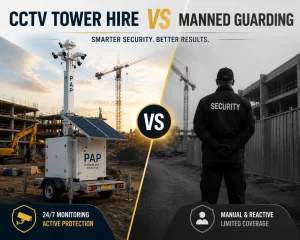
Recording footage nobody watches until after an incident is not security, it is evidence gathering after the fact. A rapid deployment CCTV tower with multi-angle HD coverage watches several access points at once and, when paired with proper monitoring, gets a response while something is still happening rather than a recording of what already happened.
New sites often have no mains connection until utilities are properly installed, sometimes weeks into the build. A tower running on hybrid solar and generator power solves this without waiting for a grid connection, and because the unit is mobile, it can be repositioned as the site develops rather than being fixed in one spot for the whole project.
A camera only helps if someone notices what it is showing. Intelligent video analytics, powered by Davantis, identifies a person or vehicle crossing a restricted line and triggers a verified alert automatically, closing the gap between something happening on site and someone actually finding out about it.
A shared gate code or a key passed between contractors makes it impossible to know who was on site at any given time. Access control systems log every entry, which matters both for day to day accountability and for narrowing down what happened if something does go missing.
Forensic marking and registration schemes make stolen plant harder to sell and easier to trace if it is recovered, which reduces how attractive a piece of machinery is to steal in the first place. This is a low cost step most site teams can arrange directly with equipment suppliers or industry registration bodies, and it works alongside physical security rather than replacing it.
Poor lighting around gates, compounds and material storage gives an intruder cover that daylight would not. This is one of the cheapest steps on this list and one of the most commonly overlooked, particularly on sites where lighting was installed for daytime work rather than overnight security.
Stored materials, temporary power and hot works all carry genuine fire risk, and a fire that takes hold overnight can destroy far more value than any theft. Fire detection systems give early warning before a fire risk becomes a serious incident rather than something discovered the next morning.
A site cleared for demolition and then left for weeks while planning or funding catches up is not the same security problem as an active build, but it is often treated that way by default. Vacant property security is built for exactly this gap, where a site looks abandoned from the street and is consequently more likely to attract attention than one that is clearly in active use.
Every site is a different shape, sits in a different location, and holds a different mix of valuable assets, so a generic checklist can only take you so far. A proper site survey identifies the specific blind spots and risks on your actual plot, which is the only reliable way to know whether the steps above are enough or whether something is still missing.
We do not quote a fixed price for site security here, because what a site actually needs depends on several variables that only become clear on a proper site visit.
A small, regular plot may need a single tower covering the main gate. A larger or irregular site with several access points needs more coverage to remove blind spots.
A short groundworks phase differs from a site running for a full year, and monitoring needs often change as the build itself progresses through different stages.
Recorded footage alone is cheaper than full live monitoring with a response protocol behind it, and this is one of the biggest cost variables worth discussing directly rather than assuming the highest tier suits every site.
A site without mains power needs a self-contained tower, while a site with an existing connection may suit a fixed installation instead, which changes both the equipment and the ongoing running cost.
Because these variables genuinely change the outcome, the only accurate way to get a number is to request a free quote based on your actual site.
Steps like better lighting, forensic marking and perimeter checks genuinely help and cost very little, which is exactly why they sit early on this list. They reduce how attractive a site looks to an opportunist, but none of them actually stop someone determined to get in, and none of them do anything once that person is already on site.
Monitored security closes that second gap. A tower with detection and a real response behind it does not just record an incident, it interrupts one while it is still happening, which is the difference between losing a tool and losing a piece of plant machinery worth tens of thousands of pounds. Most sites end up needing both, cheap deterrents to reduce opportunist attempts and monitored equipment to deal with anyone who is not deterred by a fence and a sign.
If you are not sure where your site currently sits on that scale, arrange a site survey and we will tell you honestly whether monitored security is worth the cost for your specific site or whether the basic steps are enough for now.
Assuming daytime security is the priority. Most theft happens out of hours, so a plan built entirely around working hours misses where the actual risk sits.
Installing cameras without monitoring behind them. Recorded footage nobody reviews until after an incident does not prevent anything, it only documents it after the fact.
Treating every phase of the build the same way. A vacant holding period needs a different approach to an active site, and applying one setup across both usually means one of the two is under protected.
Leaving lighting as an afterthought. Lighting installed purely for daytime work often leaves entry points and storage areas dark exactly when they need to be visible.
Waiting until after an incident to get a proper survey. Most sites we speak to after a theft could have identified the gap in advance with a straightforward site visit before anything went missing.
Every enquiry starts with a site visit rather than a standard package. We assess the perimeter, identify blind spots, and check whether a site needs a rapid deployment CCTV tower, a fixed installation, or cover built for a vacant holding period, rather than assuming one setup fits every site that calls us.
Detection uses Davantis-powered intelligent video analytics tuned to the individual site, so alerts reflect genuine activity rather than passing traffic or wildlife triggering false alarms through the night. Where fire risk is a factor we add fire detection systems, and where multiple contractors or phases need managing we bring in access control as part of the same overall plan.
Units are typically live within 48 hours of a confirmed order, with coverage across Leeds, West Yorkshire and the wider UK as standard. If your site needs security this week, speak to our security specialists and we will talk through what your specific site actually needs before anything is booked in.
Securing a construction site from theft is less about any single step and more about closing the specific gap where most incidents actually happen, the hours nobody is on site. Fencing, lighting and forensic marking reduce opportunist risk cheaply, while a properly monitored rapid deployment CCTV tower closes the gap that determined theft actually exploits. Getting the balance right on your specific site is not something a generic checklist can do on its own.
If you want a straight answer on what your site actually needs rather than a generic list applied regardless of size or location, get a free quote and we will tell you honestly where the gaps are.
Enjoyed this article?
★ Add Platinum Asset Protection as a Preferred SourceCost depends on site size, hire duration, monitoring level and power supply, so we do not quote a fixed figure here. The most accurate way to get a number is to request a free quote based on your actual site.
Yes. We cover Leeds, West Yorkshire and the wider UK as standard, deploying rapid deployment CCTV towers nationally rather than only within Yorkshire.
Units are typically live within 48 hours of a confirmed order. You can arrange a site survey to get an exact timeline for your specific site.
Verified alerts are assessed by our monitoring centre in real time, with an immediate decision made on whether to issue an audio challenge or contact the police or a keyholder, rather than being reviewed the next morning.
Not usually. CCTV is most effective when paired with intelligent detection and real monitoring behind it, since recorded footage nobody watches only helps after an incident rather than during one.
Assuming daytime presence is enough protection. Most theft and vandalism happens out of hours, so a plan built entirely around working hours misses where the real risk sits.




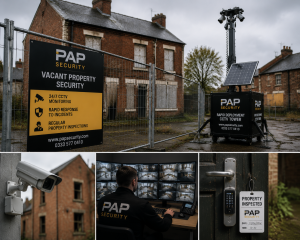
Whether you need CCTV, manned guarding, mobile patrols, access control, or alarm response, our experienced team is here to help. Get expert advice and a free, no-obligation quote tailored to your security requirements.

We use cookies to improve your experience, analyse website traffic, and store preferences. You can accept or manage cookies anytime through your browser settings.
Manage your cookie preferences below:
Essential cookies enable basic functions and are necessary for the proper function of the website.
These cookies are needed for adding comments on this website.
Statistics cookies collect information anonymously. This information helps us understand how visitors use our website.
Google Analytics is a powerful tool that tracks and analyzes website traffic for informed marketing decisions.
Service URL: policies.google.com (opens in a new window)
Clarity is a web analytics service that tracks and reports website traffic.
Service URL: clarity.microsoft.com (opens in a new window)